The Dye Master is responsible for mixing and matching the colors, with each dye blend taking a full day to prepare.
Drying:
After dyeing, the yarns are spread out on the rooftops of Kathmandu, where they dry naturally in the sunlight.
Graph:
A design blueprint is placed behind the loom to guide the weavers, showing the exact placement and color of each knot.
Weaving:
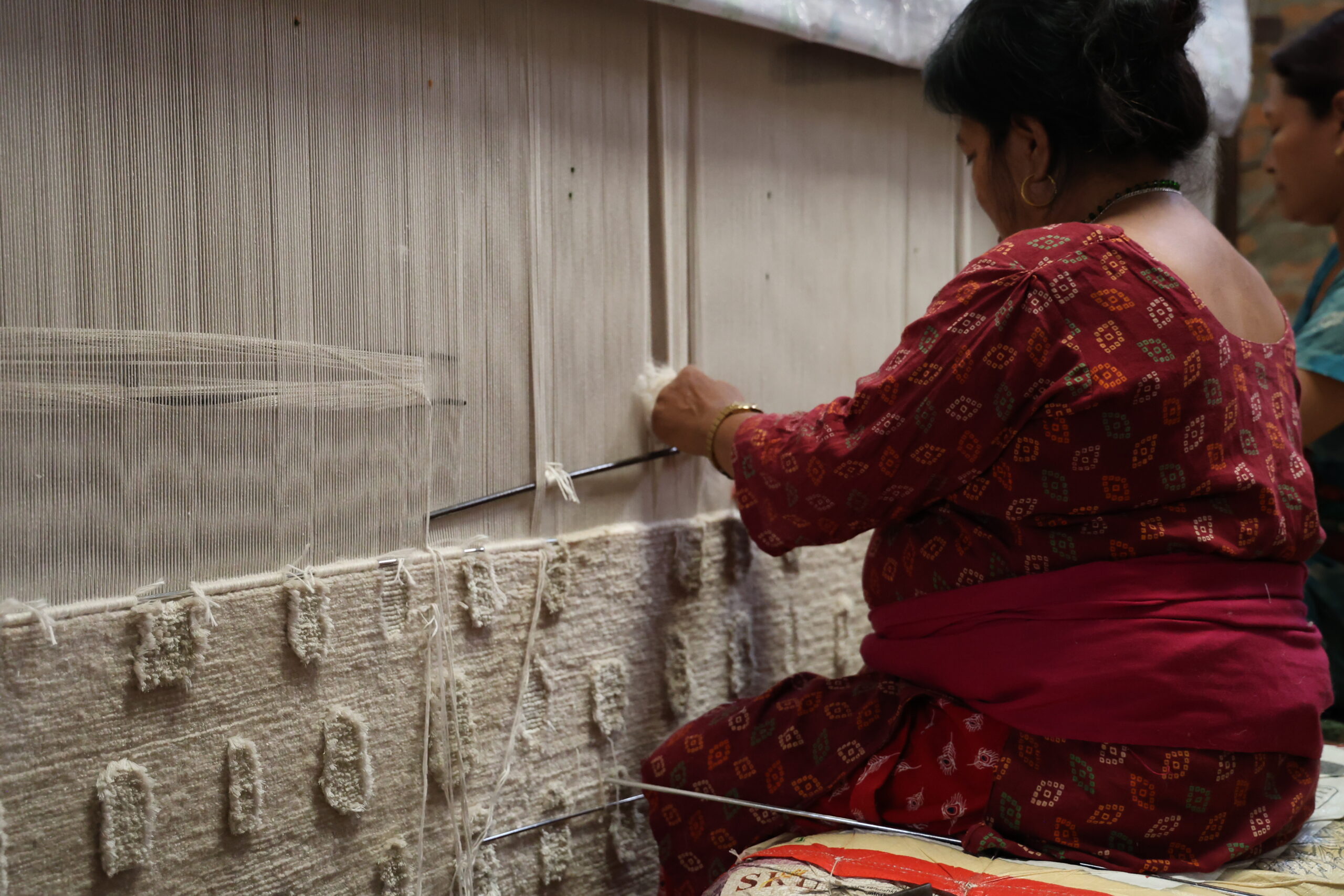
Using the traditional Tibetan knotting method, skilled artisans carefully knot yarn around the warp threads. A higher knot density means a finer, more intricate rug. In the handloom technique, the shuttle carries the yarn across, and after each row, the pile is pressed and cut into shape.
Washing:
The rugs are thoroughly washed on both sides. Wooden paddles are used to press water through the pile before the rug is left to dry in the sun.
Finishing:
Once dried, the rug is flattened, and the pile is hand-cut to the perfect height. The final touches include neatly defining the color transitions and smoothing out any height differences in the pile. Finally, the edges are wrapped with matching yarn, completing the rug for delivery.